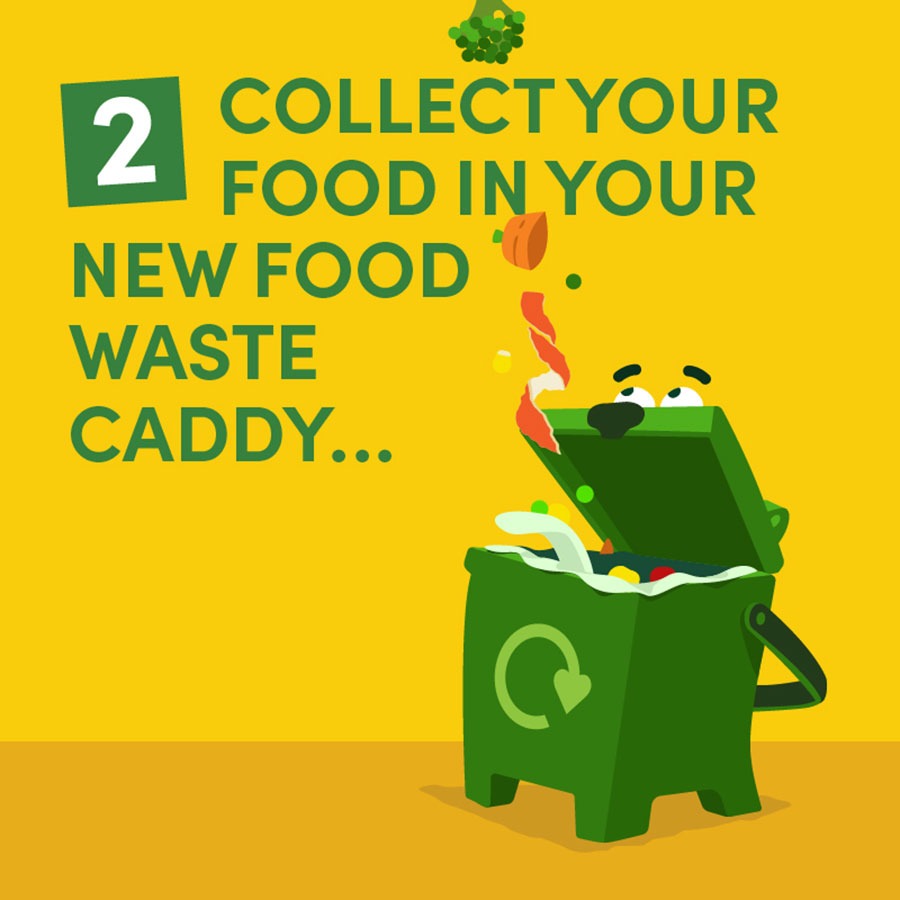
We all have food waste of some kind. It could be stuff we don’t eat like eggshells and vegetables peelings, or food that’s gone off, like mouldy bread. Food waste is a valuable resource and can be recycled at home.
All of this stuff goes in your food bin:
 Fruit cores and stones
 Vegetable peelings
 Tea bags and coffee grounds
 Meat bones
 Fish skin and bones
 Mouldy cheese
 Stale bread
 Eggshells
 ️ Takeaway leftovers
 Plate scrapings
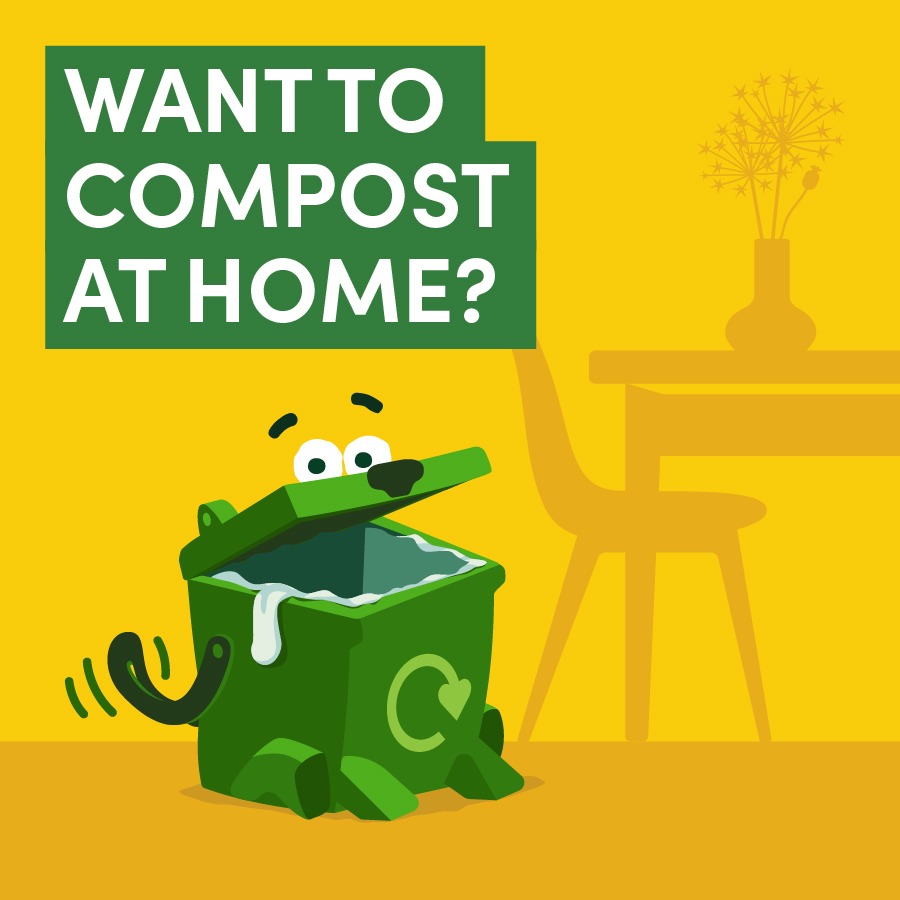
1. Check if your council has sent you a caddy in the past – it might be hiding in a cupboard.
2. Use what you have! Any box, jar or small bin can be a caddy – it just needs a lid.
3. You can buy your own caddy from your local supermarket or homeware store. You could even get one to match your kitchen!
4. You could order one from your local council.
More space in your general waste bin: Food waste can take up a surprising amount of room. By separating it into your food caddy, you’ll free up space in your general waste bin, making it easier to manage your household waste.
Keep your home cleaner and fresher: Nobody likes the smell of rotting food. Because food and garden waste is collected more frequently than general waste, using your kitchen caddy helps reduce unpleasant odours and keeps your bins cleaner and more hygienic.
Support local food production: Your recycled food waste is mixed with garden waste and turned into nutrient-rich compost. This compost is sold through Renew shops and used by local farmers to improve soil quality and grow crops. In other words, the food scraps you recycle today could help grow the food you buy tomorrow.
Reduce food waste and help protect the environment: Using a kitchen caddy makes it easier to see how much food you throw away. This simple habit can encourage better meal planning, smarter shopping and greater use of leftovers, helping you waste less food and reduce your environmental impact.

All part of edible and inedible food such as:
No, you can buy your own kitchen caddy from supermarkets, if you’d prefer a particular colour or style.
No, liquids will leak or break the compostable liners. Not only will this be messy, it might also make your caddy smell. Only solid fats can be put in your caddy. Excess oil can be taken to your nearest recycling centre for recycling.
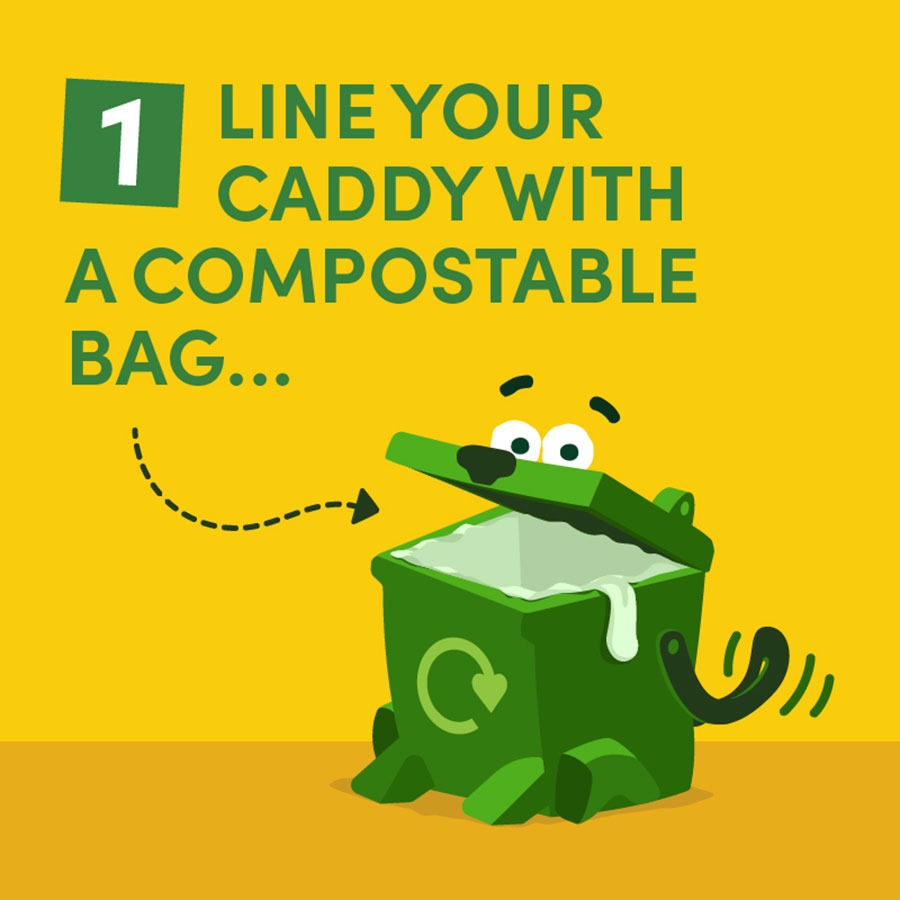
No, only compostable liners can be used. Your food and garden waste is turned into compost. When buying compostable liners make sure it has the seedling logo on it.
Plastic bags and biodegradable bags will not breakdown if mixed into the food and garden waste spoiling the composting process.
No, only use compostable liners in your food caddy. Though technically compostable, materials like paper won’t break down at the same rate as your food waste which, causes problems during the composting process.
We recommend using a compostable liner because it makes food waste easier to collect and helps keep your caddy fresh. However, you can put food waste in loose if you prefer.
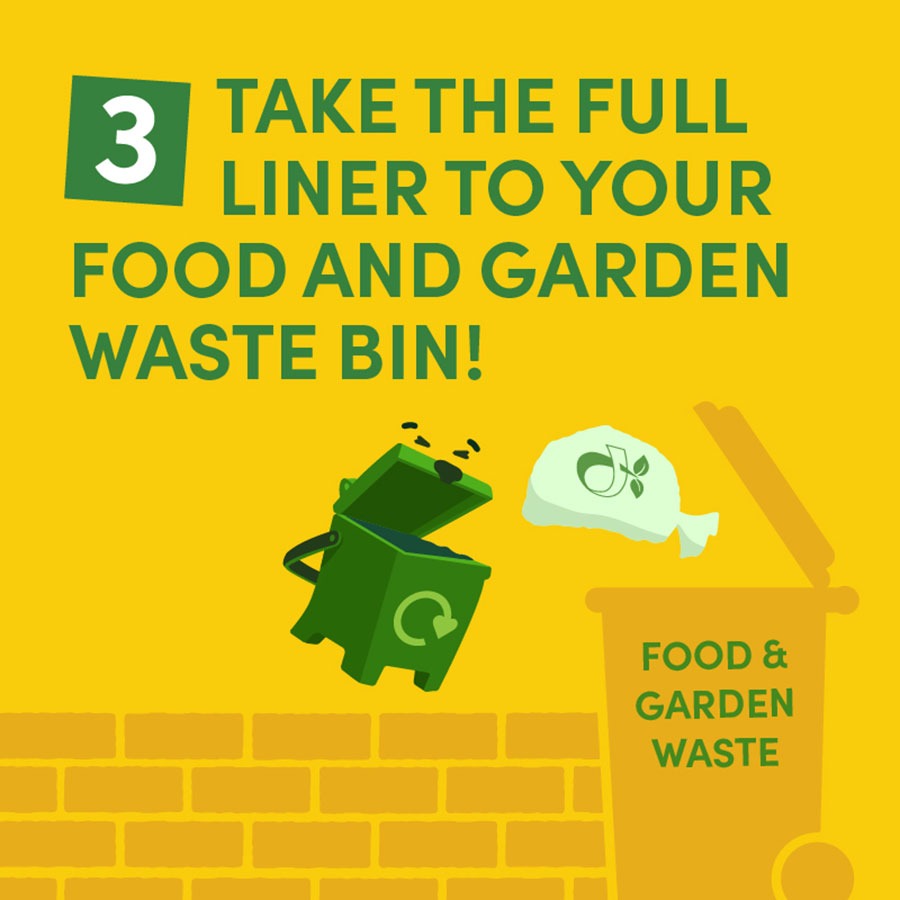
Alternatively, if you don’t have a caddy liner, it might be better to put food waste directly in your food and garden bin.
It depends on where you live. Some flats offer food waste collections, but most of them don’t at the moment.
You can check with your local council or speak to your building manager about whether it’s possible to start collecting food waste where you live.
Your outdoor caddy and bin have a secure lid which makes it very difficult for foxes or squirrels to get in. Make sure you lock your caddy or close your bin lid after placing food inside.
If you don’t have a food waste collection service your food waste should go in the general waste bin.
Alternatively, if you have a garden you can try home composting. For smaller houses or flats you could try a bokashi bin. Learn more about compost.
No, food waste is not collected at any of our recycling centres. If you don’t have a food waste collection service you have to dispose of your food waste in your general waste bin.