Leaf mould is just decomposed leaves that have been broken down by fungus.
Good quality, well-rotted leaf mould (more than two years old) can be used as seed-sowing compost, or mixed equally with sharp sand, garden compost and good quality soil for use as potting compost.
Leaf mould that is less than two years old can be used as mulch, soil improver (worms love it!) autumn top-dressing for lawns, or winter covering for bare soil.
Yes, but some types of leaves break down quicker than others.
Leaves from evergreens, conifers and pines are slow to decompose. It is better to add these to your compost heap.
It’s totally fine to use your lawn mower to shred any leaves together. Any grass clippings gathered at the same time will help to increase the nutrient value of the leaf mould. However, if your lawn contains weeds, be careful as you don’t want to be adding weed seeds to your leaf mould!
For more tips about composting, visit our Let’s Compost Now page.
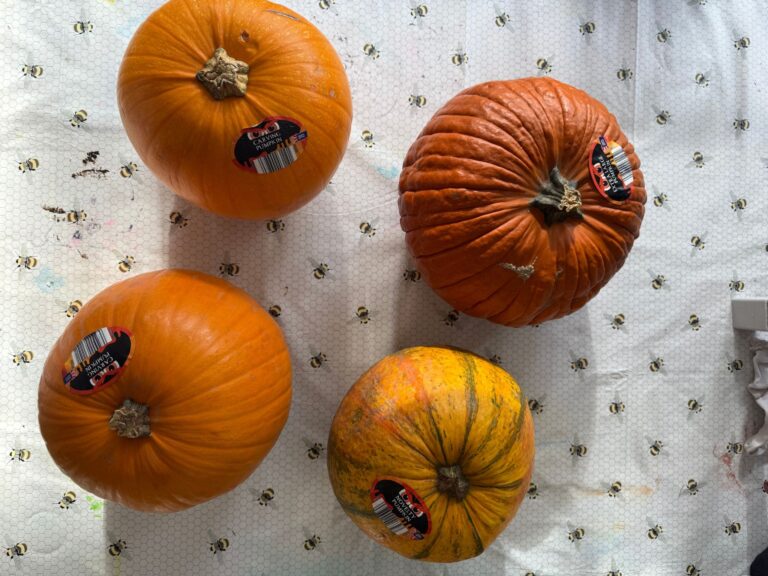
After learning that more than 22 million pumpkins are wasted each Halloween, I challenged myself to see how many meals I could make from one pumpkin.
READ MORE
When these things are thrown away instead of recycled, valuable resources are lost forever.
READ MORE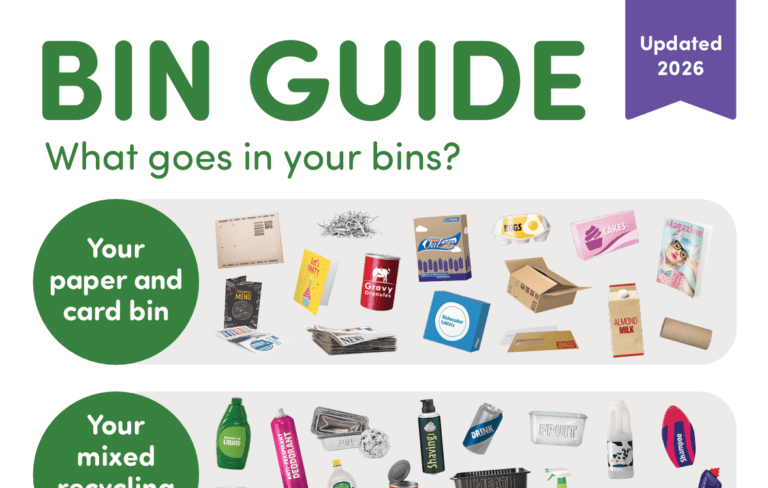
Download your free bin guide. Keep it handy on your phone or print and pop it on the fridge or by the bins.
READ MORE
Read how lockdown has changed our Jess’s food shopping habits and how she batch cooks meals to save money and on time spent on washing up!
Over the past few months I’m sure I’m not the only one who has changed my shopping habits when it comes to food. Before lockdown I would find myself doing small shops several times a week on my way home from work, buying food just for that evening’s meal. Now I wait until a weekend, make a list and do a much bigger weekly shop with a rough idea of meals planned. Also, with less plans at the weekend I’ve been using some of this extra time to batch cook for the week – this takes the hassle out of cooking during the week after work.
Batch cooking meals which only requires one pot to wash up after is even better, so below I have shared some ideas of what I’ve been cooking that requires very little washing up (these are vegetarian but can easily be changed to include meat):
Batch cooking is also great for using up any leftover vegetables you may have in your fridge that are nearly past it as the recipes and ingredients are really flexible. These meals can then be portioned and then reheated on the day you want them and served with rice, pasta or bread (which doesn’t require too much cooking in the evening!)
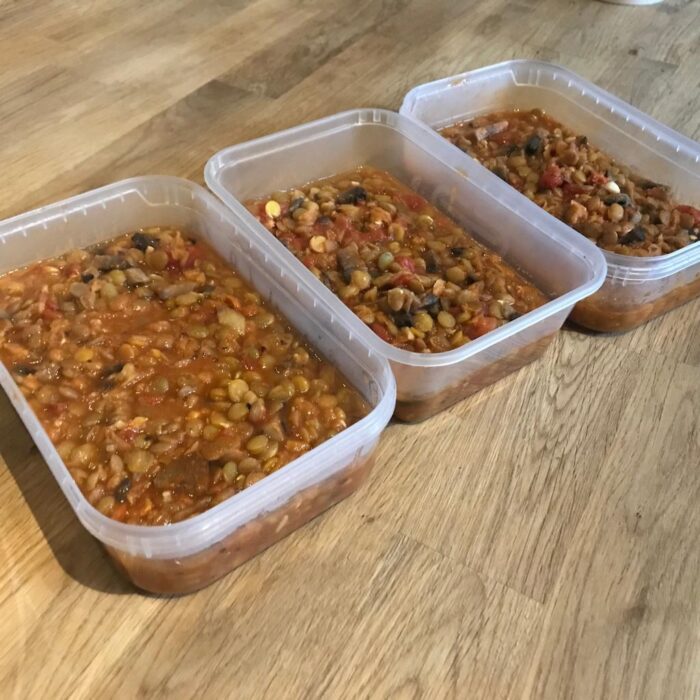
In my local supermarket it is hard to find loose and single items such as onions, potatoes and leeks. However when batch cooking, I can use up entire packets when cooking multiple portions of one meal, meaning less waste and no more sad looking leeks at the back of your fridge.
The past few months have made me rethink my old shopping and cooking habits. I used to pop out to the shop if I didn’t fancy what I already had in the fridge for tea. The way I have been shopping recently will be something I carry on doing as it has saved me money and food waste.
After learning that more than 22 million pumpkins are wasted each Halloween, I challenged myself to see how many meals I could make from one pumpkin.
READ MORE
When these things are thrown away instead of recycled, valuable resources are lost forever.
READ MORE
Download your free bin guide. Keep it handy on your phone or print and pop it on the fridge or by the bins.
READ MOREMost people are recycling right in Greater Manchester. However truck loads of paper and card collected last year couldn’t be recycled because some people are putting the wrong things in their paper and card bins and even purposely hiding rubbish in their bins.
This is a problem because companies that process paper and card only want dry paper and card recycling. Wrong things in the recycling bin, lowers the quality which means they can’t recycle it and it will end up being processed as general waste instead.
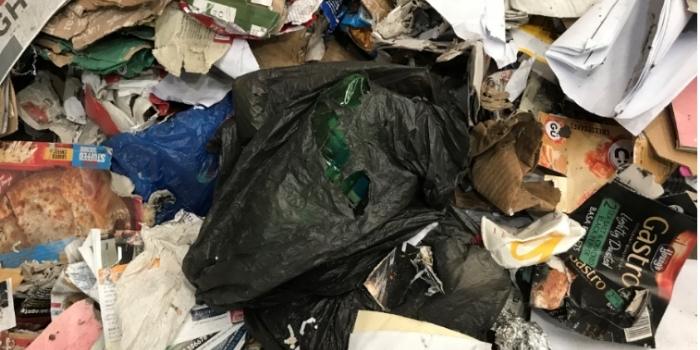
For every tonne of poor quality paper and card which has to be processed as general waste, costs your council, on average, an extra £88 per tonne – that’s up to £520 per truck load.
In June, 168 lorry loads were rejected, which is 833 tonnes.
When your paper and card recycling bins are collected and emptied they go to a transfer loading station in Greater Manchester where the truck load is inspected.
Things that we found include:
Hundreds paper and card bins are emptied every week across Greater Manchester. There are staff to inspect the quality of the truck loads but they only have minutes to do this – it is not their job to sort out other people’s rubbish.
No, good quality paper and card recycling is delivered to Saica a paper and recycling company in Carrington.
No, nappies and wet wipes are mostly made of plastic. Nappies and wet wipes should go in your general waste bin.
We need everyone in Greater Manchester recycling right.
Make sure you only recycle paper and card in your paper and card recycling bin. Nothing else.
These are the things you can put in your paper and card bin:
1. Tell your friends and family how to recycle right
2. Follow @recycle4gm on Facebook, Twitter and Instagram
3. Take part in a virtual open day and see what happens to your recycling
4. Subscribe to our newsletter
5. Tell your local school or community group to book a virtual visit to our recycling facility
After learning that more than 22 million pumpkins are wasted each Halloween, I challenged myself to see how many meals I could make from one pumpkin.
READ MORE
When these things are thrown away instead of recycled, valuable resources are lost forever.
READ MORE
Download your free bin guide. Keep it handy on your phone or print and pop it on the fridge or by the bins.
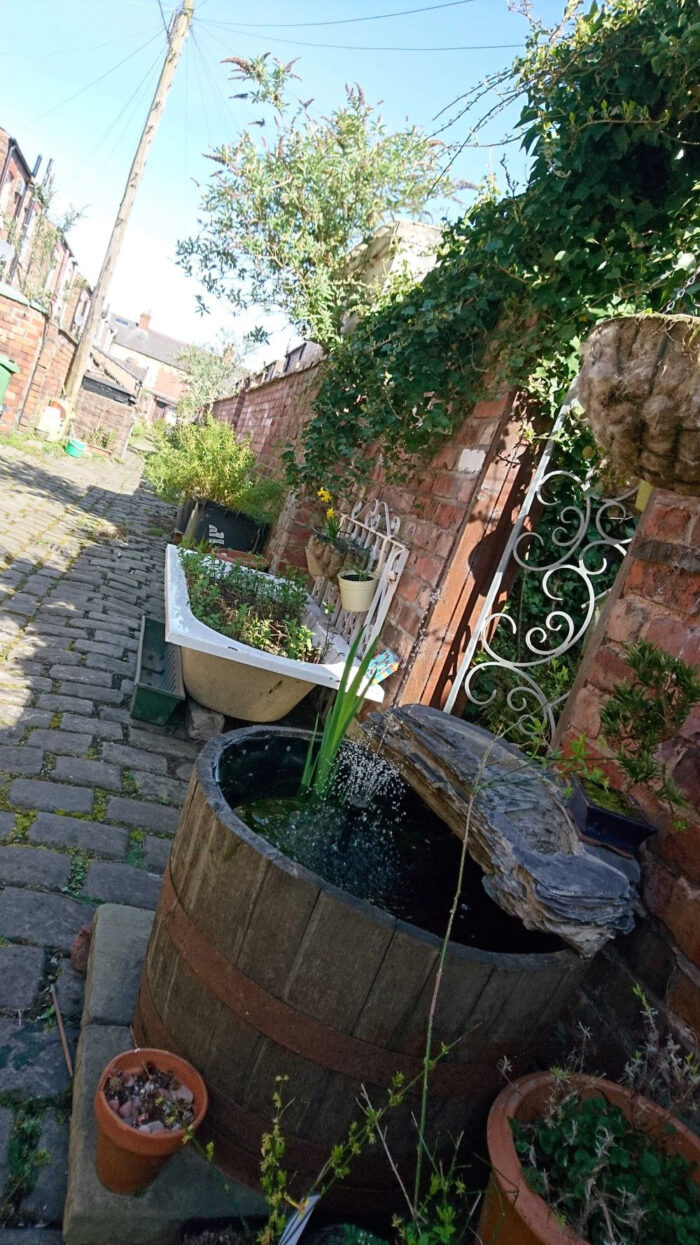
READ MOREJust over two years ago, my family and our neighbours began to transform our shared alleyway. At the time, it was a rubbish-strewn wilderness, used only for the storage of our communal bins. Now it is a community garden in which we are growing flowers and shrubs, trees, fruit, vegetables and herbs. Given our limited resources and our desire to improve the environment globally as well as locally, recycling has been an important part of the project.
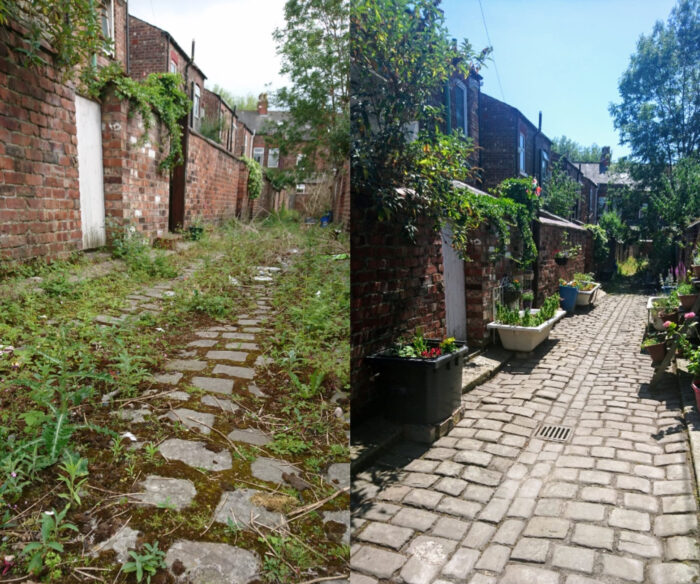
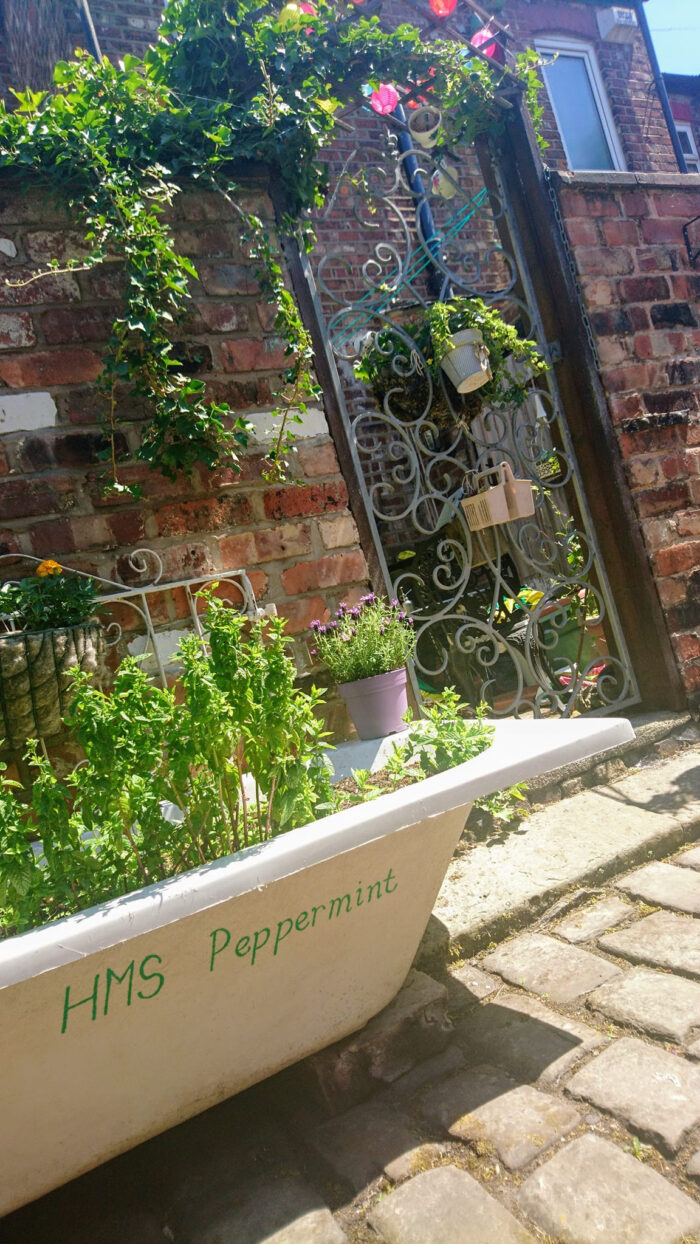
The simplest way to recycle in a project of this kind is by reusing containers, many of which may originally have been designed for quite a different purpose. Perhaps our most unusual containers are our four baths, which were otherwise destined for landfill when their previous owners redecorated their bathrooms. Baths make sizeable planters for shrubs or small trees, though one of ours is entirely full of peppermint. This does at least mean we can make mint choc chip ice cream, mojitos, peppermint tea and mint sauce all on the same day – and still not run short!
Wheelie bins also make two good-sized planters when cut in half horizontally with a reciprocating saw. Of course, this only makes sense if the wheelie bin is no longer needed, as was the case when our area converted to using communal bins. The top half of the bin can be made to hold compost if you line the base with old compost bags. Due to other changes in the recycling system we also ended up with some large plastic recycling boxes and a surplus food recycling bin, all of which we are now using for container growing. In order to turn these various bins and boxes into planters, the only thing we needed to do was to clean them and drill a few drainage holes in the bottom of each, so that the plants would not get waterlogged. The plug hole seems to provide sufficient drainage for the baths.
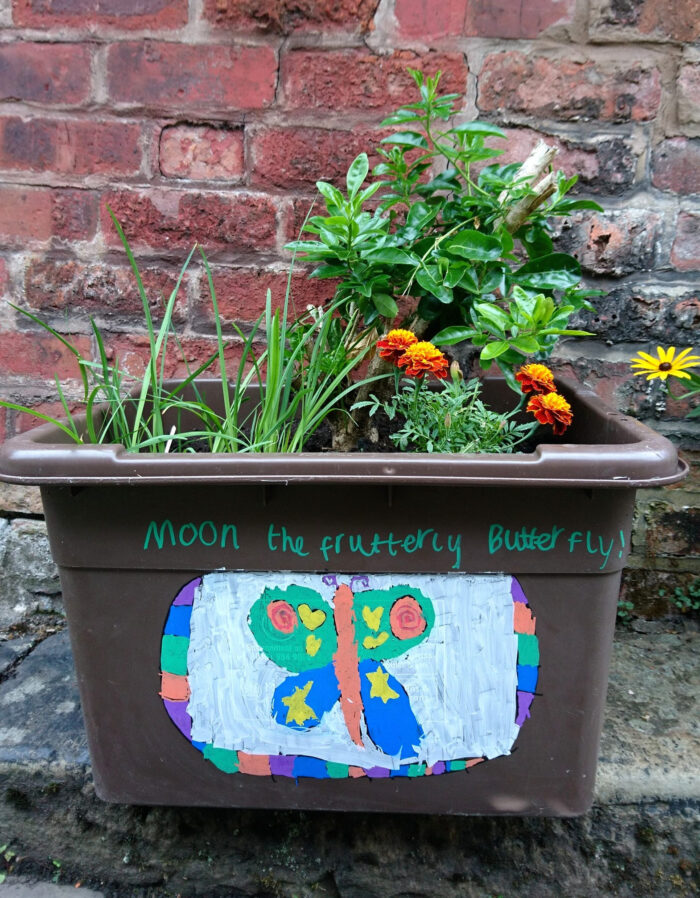
Many of our more unusual planters have been given to us by people decluttering or salvaged from the bins, often when student tenants move out. We are using mop buckets, kitchen bins, mugs, a cutlery drainer, plastic crates and even a child’s pull-along dinosaur trolley! Old food containers such as plastic milk bottles can also be upcycled into mini hanging baskets and we also have plants growing in industrial size mango chutney containers!
Greening our alleyway has really changed the way I look at people’s discarded belongings. Some strange objects end up in our communal bins, but these days I see their potential. Metalwork gates and bed headboards have become trellises for plants to grow up; nesting tables are used to raise small pots to a convenient level, and keep young plants further from slugs and snails; an old blackboard was repurposed to record alleyway wildlife sitings and an old cupboard became a pot store.
Upcycling projects can be as simple or as elaborate as you want them to be. Reclaimed bricks and wood can be used to build raised beds. My husband Mike has been inspired to create a mini pond out of an old whisky barrel, using reclaimed roof tiles to build a tiny waterfall. (We had to buy the barrel…unfortunately whisky barrels don’t routinely end up in our communal bins!) He has also made a bird bath out of a standard lamp and has built a green roof using slats from a discarded futon. The waterproof layer is made from an inflatable bed which was damaged beyond repair.
If you’re interested in setting up your own alleyway project, the first thing to do is start talking about it! If you know your neighbours, ask them to get involved. If not, decide on a day to start work and post a note through all your neighbours’ doors, encouraging them to join in.
We have found WhatsApp to be the most effective way to keep in touch, so maybe include a phone number in your note and set up a WhatsApp group. It’s also a good idea to look for help a little further afield.
In our area of Moss Side we’re lucky enough to have a local network of green alleyways, which means it’s easy to borrow tools and share expertise, as well as passing on plants and unwanted materials. It’s also worth chatting to friends and family about the project.
We’ve had really generous support from all sorts of people who have given time to help us with clearing or gardening, or who have donated plants from their own gardens, as well as garden supplies and all sorts of oddities that can be turned into planters. You might even inspire someone else to start their own community garden!
After learning that more than 22 million pumpkins are wasted each Halloween, I challenged myself to see how many meals I could make from one pumpkin.
READ MORE
When these things are thrown away instead of recycled, valuable resources are lost forever.
READ MORE
Download your free bin guide. Keep it handy on your phone or print and pop it on the fridge or by the bins.
READ MORE
With the rise of people choosing to pass on plastic, the range of more sustainable disposable items has sky rocketed. As a result, we are getting lots of people asking whether compostable coffee cups, straws and cutlery can go in the food and garden bin.
Unfortunately, the answer is no. No matter what’s on the label, compostable or biodegradable cups, straws and plates can’t go in your food and garden bin. And here’s why.
The terms biodegradable and compostable are sometimes used interchangeably but they actually mean very different things. Let’s look at the dictionary definitions.
biodegradable
adjective
1. A substance or object capable of being decomposed by bacteria or other living organisms
compostable
adjective
1. Something that can be used as compost when it decays
This means that biodegradable items can break down within the environment with the help of bacteria or other living organisms. But this doesn’t necessarily mean it’s good for the planet. For example, some plastic bags can biodegrade into tiny pieces in around 20 years but they are still harmful to the environment.
Meanwhile, if something is compostable, it means it is made of organic matter and it can completely break down to make nutrient rich compost.

They may be made from natural materials, and therefore compostable, but compostable coffee cups take years to breakdown whilst food and garden waste only takes six weeks at a In Vessel Composting facility.
The only thing you can put in your food and garden bin (aside from food and garden waste) are compostable food bags with the EN13432 seedling logo on which are used to line the kitchen food caddy. These bags are made from potato starch so break down at the same rate as food and garden waste. This also includes Co-op’s new compostable carrier bags which are being rolled out across Greater Manchester.
So if it’s not food or garden waste, it belongs in your general waste bin.
Ditch single use items and choose reusable alternatives. There are so many reusable coffee cups and straws available now. Lots of coffee shops with give you a discount when you take your own cup in too! Why not put a set of cutlery in your bag so you can say no to single use forks? Check out our blog post on reusable items for more great ideas.
After learning that more than 22 million pumpkins are wasted each Halloween, I challenged myself to see how many meals I could make from one pumpkin.
READ MORE
When these things are thrown away instead of recycled, valuable resources are lost forever.
READ MORE
Download your free bin guide. Keep it handy on your phone or print and pop it on the fridge or by the bins.
READ MOREThere’s lots of things which we keep hold of – shoved in a drawer or stuffed in a cupboard because we don’t really know what to do with them. We either feel too guilt-ridden to bin them or just don’t think they will be of any use to anyone. Well, think again! Here are 7 things you can donate!
Duvets and pillows can’t be recycled but they can be reused by your local animal shelter or animal rescue charity as bedding.
Have one too many spices or a can of pineapple gathering dust? There’s no need to bin them. Try the handy OLIO app, a quick and free way to give your unwanted food a new home.
Every penny counts! We all come back from holiday with the odd coin which ends up rolling around at the bottom of a bag or hidden in a drawer. Most high street charities have collection boxes for coins of any kind, even old coins.
You’ve got mail! Used stamps from cards and parcels can be donated to some charities such as Macmillan Cancer Support, RNIB and Oxfam. Just tear them off the envelope and start collecting!

If you have electrical items still in good reusable condition, whether it’s a toaster, a hairdryer or a lamp, you can donate them to some charity shops. If you have a broken electrical item why not see if you can get it repaired before replacing? Find a repair cafe near you. Or if it’s beyond repair, take it to your local Recycling Centre – never put electrical items in the bin!

We all have a surplus of pens scattered here, there and everywhere around the house but when we really need one we can never find one. If you have one too many pens or other stationery you can donate them to some charities and education projects.

If you have any unused makeup or toiletry gift sets from Christmas and birthdays you can donate them to Elle for Elle which will help women and children in refuge accommodations. There are six drop off points in Greater Manchester.
After learning that more than 22 million pumpkins are wasted each Halloween, I challenged myself to see how many meals I could make from one pumpkin.
READ MORE
When these things are thrown away instead of recycled, valuable resources are lost forever.
READ MORE
Download your free bin guide. Keep it handy on your phone or print and pop it on the fridge or by the bins.
READ MORENot all wrapping paper is actually paper. Some is made with plastic or foil.
To check if it can be recycled, try the scrunch test. If you can scrunch the paper into a ball and it stays scrunched, you can recycle it.
After learning that more than 22 million pumpkins are wasted each Halloween, I challenged myself to see how many meals I could make from one pumpkin.
READ MORE
When these things are thrown away instead of recycled, valuable resources are lost forever.
READ MORE
Download your free bin guide. Keep it handy on your phone or print and pop it on the fridge or by the bins.
READ MOREDitch the paper and go digital. Send a text message, an email or create a private event on social media. There are loads of websites which let you design your own invitations for free.
Instead of buying single-use plastics like balloons and confetti, why not save some money and make decorations out of paper instead, such as bunting, garlands and streamers? You can find loads of ideas on Pinterest and DIY craft websites.
If you don’t want to be overloaded with presents that you don’t want, why not:
View this post on Instagram
There’s always uneaten leftover food at parties – that’s because we are made to think too much food is better than running out. Try not to over cater, set a certain amount per person and have takeaway boxes at the ready so guests can take a doggy bag home with them.
Instead of using disposable single-use cups and plates, use the ones you have in your cupboard! If you don’t have enough, borrow from friends and family or you can even hire party kits.
Don’t sweep everything into a black bin bag at the end of a party, clean as you go. Get the recycling bins out front row and centre so everyone can see them and use them!
The dreaded plastic party bags that usually contain plastic or things wrapped in plastic. Here are some plastic free alternatives:
We love these eggbox growing kits!
If you have any ideas on how to throw the ultimate zero waste party, please share them with us on Facebook, Instagram and Twitter!

View this post on Instagram
After learning that more than 22 million pumpkins are wasted each Halloween, I challenged myself to see how many meals I could make from one pumpkin.
READ MORE
When these things are thrown away instead of recycled, valuable resources are lost forever.
READ MORE
Download your free bin guide. Keep it handy on your phone or print and pop it on the fridge or by the bins.
READ MORE
